When exploring which preschool curriculum is best for your child, many parents in Singapore come across the Montessori method.
Known globally for its structured independence and hands-on learning, Montessori has gained popularity in the local preschool scene. But is it the right fit for your child, especially when compared to other approaches such as KiddiWinkie's purposeful play and inquiry-based learning?
Let’s explore.
What is Montessori?
Montessori is an educational approach developed by Dr. Maria Montessori in the early 1900s. It emphasises self-directed learning, allowing children to choose activities from a prepared environment filled with materials designed to promote independence, concentration, and problem-solving.
Teachers act as guides rather than instructors, creating opportunities for children to explore at their own pace.
Key Principles of Montessori Education
Montessori is grounded in several principles:
Child-led learning: Children select their own tasks based on interests and developmental readiness.
Prepared environment: Classrooms are designed with carefully chosen materials that encourage exploration and discovery.
Mixed-age classrooms: Children learn together in groups spanning a few years, fostering peer mentoring and collaboration.
Focus on independence: Children are encouraged to complete tasks on their own, building confidence and self-reliance.
Hands-on learning: Practical, sensory-rich materials help children grasp abstract concepts through concrete experiences.
Montessori vs. Inquiry/Play-Based Learning
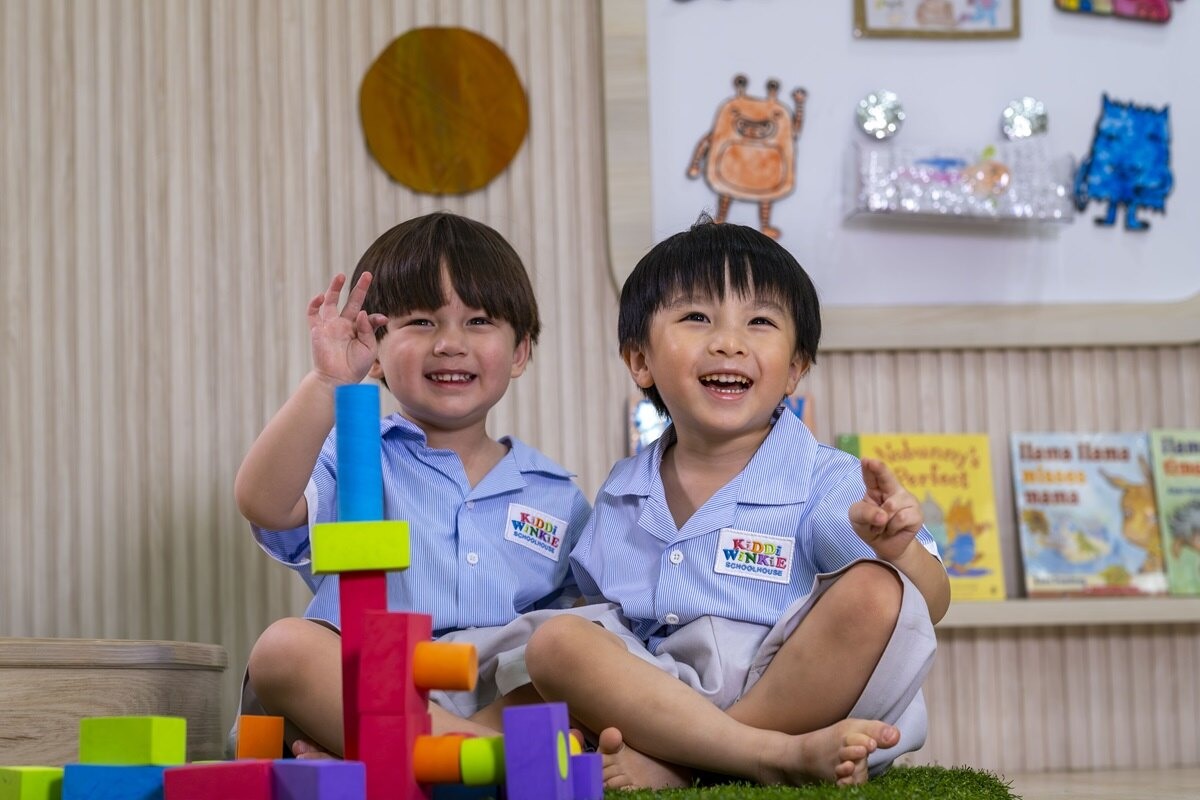
While Montessori encourages independence and self-direction, approaches like purposeful play and inquiry-based learning that KiddiWinkie offers take a different path.

At KiddiWinkie Schoolhouse, our curriculum focuses on purposeful play in the early years and progresses to inquiry-based learning in the preschool years. This means children not only develop independence but also thrive through collaboration, creativity, and guided exploration.
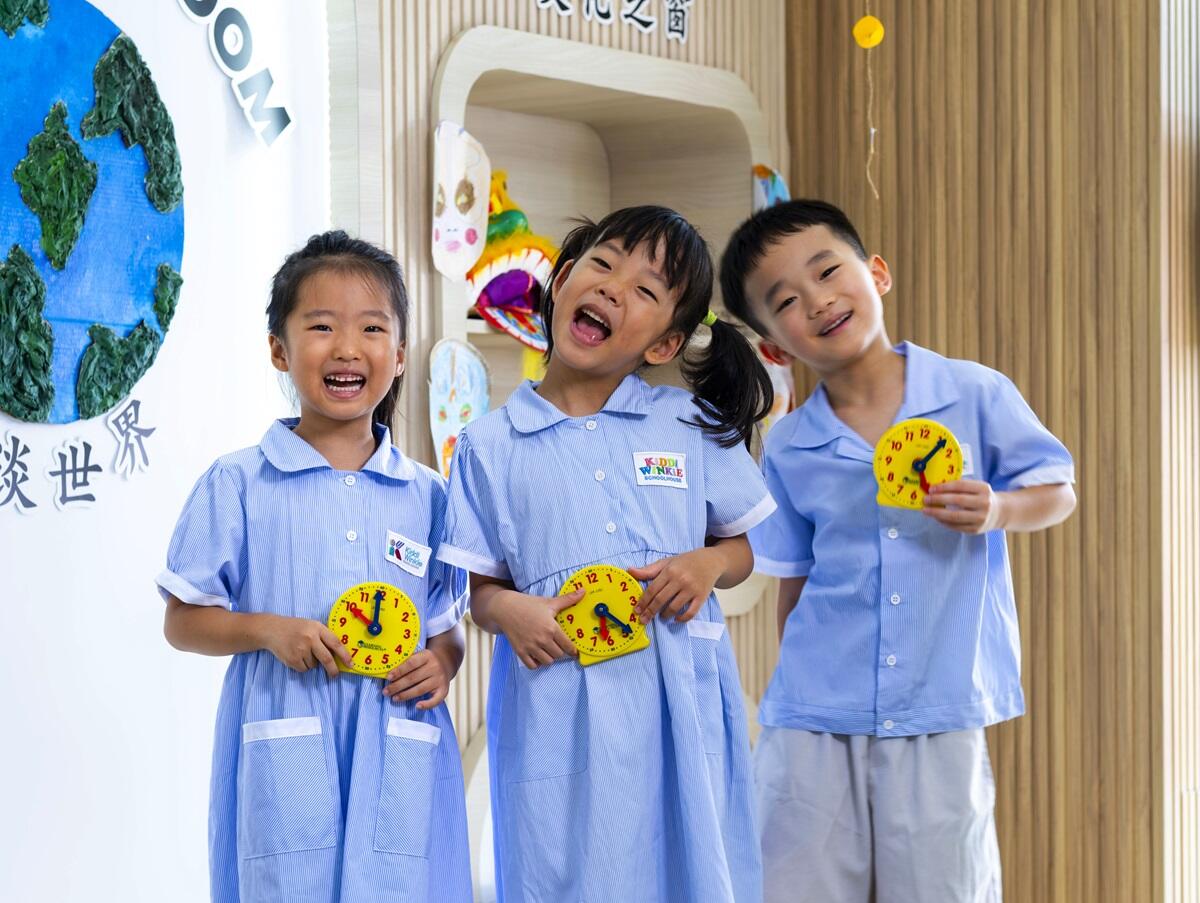
Unlike the Montessori approach, where children often work individually, inquiry-based learning encourages teamwork and critical thinking as children ask questions, investigate, and share discoveries together.
Both approaches promote holistic development, but parents should consider whether their child thrives more in an individually driven environment (Montessori) or a collaborative, play-and-inquiry-focused setting which is offered at KiddiWinkie.
Pros and Cons of Montessori: A Singapore Parent's Context
Like any educational approach, Montessori has its strengths as well as limitations. Understanding both sides can help parents decide if this philosophy suits their child and prepares them for the school years ahead.
Advantages:
Montessori education is well known for fostering independence and self-motivation. Children are encouraged to take charge of their learning, make choices, and develop problem-solving skills from a young age.
The structured yet calm environment also allows them to focus deeply on tasks, which can lead to strong concentration and perseverance. For children who enjoy working at their own pace and value routine, this approach can be particularly rewarding.
Challenges:
On the other hand, Montessori’s strong focus on individual work means that children may experience fewer opportunities for collaborative group activities compared to play- or inquiry-based settings. This could limit chances for teamwork and peer learning, which are valuable for social development.
Another consideration in Singapore is that Montessori materials and methods do not always align perfectly with the academic structure of local primary schools, requiring children to adjust later on.
Finally, Montessori centres are often concentrated in specific areas and generally command higher fees, which may affect accessibility for some families.
How Parents Can Evaluate if Montessori Fits Their Child
Every child learns differently, and the best curriculum depends on your child’s personality and developmental needs. Montessori may suit children who enjoy working independently, focusing deeply, and exploring tasks at their own pace.

On the other hand, if your child thrives on interaction, creativity, and guided inquiry, KiddiWinkie’s Natural Rhythm™ pedagogy could be a better fit. Our neuroscience-backed approach respects each child’s natural pace of growth while weaving in aspects of care, movement and curiosity, where every experience is intentionally designed to support optimal brain development during the early years. This way, children are equipped not just for academic readiness, but also for lifelong curiosity, adaptability, and social skills.
Parents who are exploring alternatives to Montessori can learn more about our curriculum approach or visit a centre to experience how learning comes alive at KiddiWinkie.
Explore the Right Fit for Your Child
There is no one-size-fits-all answer when it comes to preschool education. Montessori in Singapore offers a strong foundation in independence, while purposeful play and inquiry-based learning open doors for creativity, collaboration, and discovery.
If you’re exploring which preschool curriculum is best, we welcome you to discover the KiddiWinkie difference. Our Natural Rhythm™ pedagogy balances structure and flexibility, ensuring children are nurtured holistically in their most formative years.
👉 Explore our curriculum and find a KiddiWinkie Schoolhouse near you.
FAQs About Montessori in Singapore
1. Is Montessori recognised in Singapore?
Yes, Montessori preschools are recognised in Singapore and operate under ECDA’s regulations. However, not all centres follow a pure Montessori approach — you will discover that many combine Montessori with other early childhood practices.
2. What age is suitable for Montessori?
Montessori programmes typically start from toddler age (around 18 months) up to the preschool years (6 years old), with some centres offering infant care as well.
3. How is Montessori different from play-based learning?
Montessori focuses on structured independence and individual choice, while play-based learning — such as the purposeful play approach at KiddiWinkie — encourages social interaction, creativity, and exploration through guided play.
4. Is Montessori better for academic readiness?
Montessori builds strong focus and problem-solving skills, but in Singapore, the transition to primary school may require some adjustment as the approach does not always mirror the local academic curriculum. Inquiry-based learning, like that at KiddiWinkie, is designed to prepare children for both academic and social readiness.
5. Should I choose Montessori or KiddiWinkie’s approach?
The choice depends on your child. Montessori may be better for children who prefer working independently, while KiddiWinkie’s Natural Rhythm™ pedagogy supports children who thrive through collaboration, purposeful play, and inquiry-based experiences.
Follow us on social media to stay updated on our latest updates and happenings:


