
Research shows that 90% of neural growth occurs before a child turns six, forming key connections that will shape how they think, learn, and approach new challenges.
What happens inside those years matters – and inquiry-based learning is built around exactly that understanding. Here’s your parent’s guide to inquiry-based learning and how our preschool in Singapore centres it in our curriculum.
What is Inquiry-Based Learning? How Does it Support the Developing Brain?
In traditional rote learning, students are spoon-fed what the expected outcome and then are shown evidence to prove how and why this is the case.
Inquiry-based learning, as the name suggests, revolves around activating children’s natural curiosity so they learn by doing, exploring, and experiencing.
When children encounter something new or unexpected, the brain releases dopamine to sharpen attention and encode new information. This primes them to better retain what they discover, each new nugget of information deepening the pathways and connections in their brain.
With this kind of learning, children become personally engaged in directing the path each lesson takes. They then use logic, reasoning, and direct experience to make sense of the world, revising their thinking as they go. They may form simple hypotheses and ask questions or try different ways to test their hypothesis. Instead of waiting for solutions to be handed to them, they become independent problem solvers.
What Inquiry-Based Learning Looks Like in a Preschool Setting
Inquiry-based learning is not unstructured free play, nor does it leave children to work everything out alone. Instead, educators create the conditions for genuine curiosity to take hold, then help encourage critical thinking and deeper understanding.
Imagine if children were asked to build the tallest block tower possible. They may come together to think about ways to make this tower tall and stable, and then proceed to test their ideas out with real blocks.
As the towers inevitably fall and fail, teachers encourage and prompt students with age-appropriate questions: “Why do you think it fell? What do you think we could do better to fix this problem? Why do you think it’s standing upright? What else can we find out?”
At our premium kindergarten in Singapore, educators do not move quickly toward answers. Instead they ask questions back, extend the investigation, and give children the time to sit with an idea before moving on.
At KiddiWinkie Schoolhouse, our core programmes are closely mapped to the Nurturing Early Learners (NEL) and the Early Years Development Framework (EYDF) set by the Early Childhood Development Agency (ECDA). Our curriculum is specially designed to waken and excite children’s curiosity and develop their love for learning, with investigations like these woven through every part of the day.
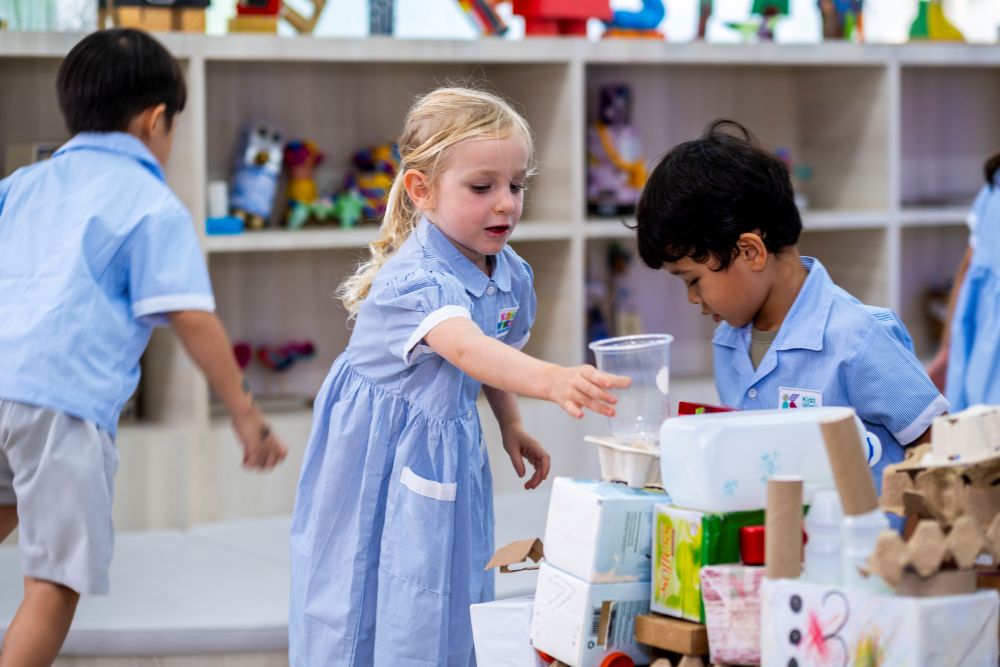
For example, through our Playtinkers™ programme, children use loose parts (e.g. recycled household items, carton boxes, rolls) to think critically and problem-solve creatively. It encourages them to explore, discover and innovate as they think out of the box, building numeracy, reasoning, and an appetite for discovery in the process.
How Does Inquiry-Based Learning Build Strong Foundations for Lifelong Learning and Formal Schooling?
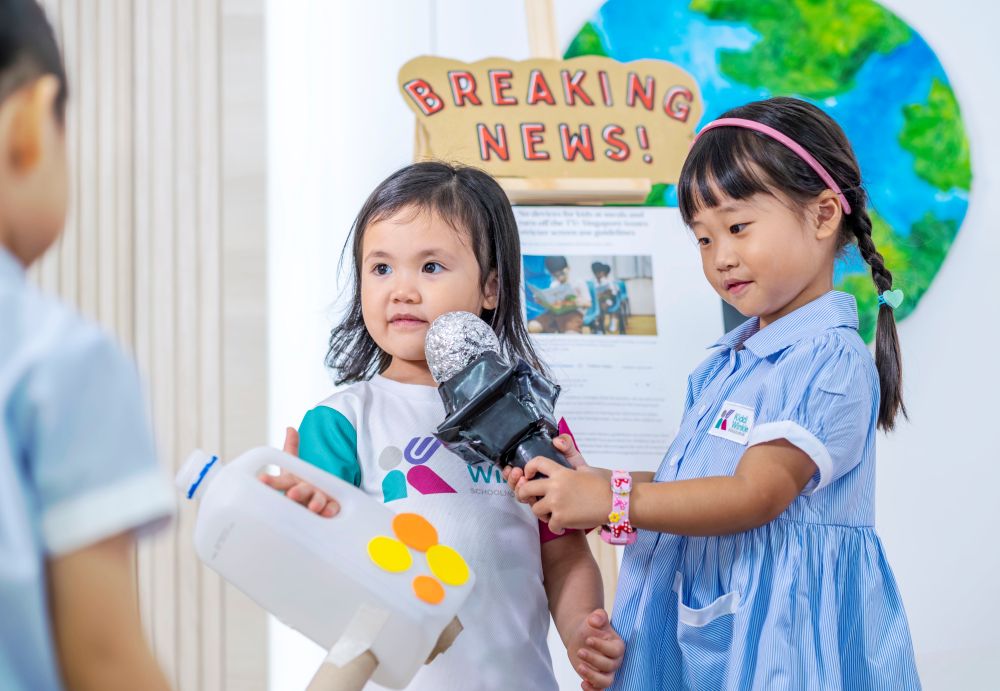
The children who transition most confidently into primary school are typically those who have learned how to learn: how to ask a useful question, persist when something is difficult, and to adapt when the first approach does not work. These are the cognitive foundations that formal learning depends on.
Just take the Singapore Science syllabus for primary school by the Ministry of Education, which is built around the spirit of scientific inquiry and “seeks to nurture the student as an inquirer”. KiddiWinkie Schoolhouse’s inquiry-based approach aligns with this by fuelling children’s natural instinct for curiosity to help them explore their natural and physical world.
Is Inquiry-Based Learning Right for Your Child?
Quiet, observational thinkers and expressive, hands-on learners both thrive when curiosity is genuinely welcomed and extended. With a strong foundation in inquiry-based learning in their preschool years, KiddiWinkie Schoolhouse children are amply prepared for their primary school transition. It’s of utmost importance to us that our children learn how to navigate the world and develop a strong love of learning that will never be snuffed out.
The most meaningful way to understand how to encourage curiosity in kids is to watch it happen. Book a tour to find out more about how we can support you and why our curriculum can bring out the best in your child.


