Most parents have witnessed it: a young child moving between English and Mandarin in the space of a single sentence, switching without hesitation, without pausing to search for a word. It looks effortless. What is actually happening inside the developing brain is far more sophisticated, and understanding early bilingual brain development changes the way parents think about the bilingual question entirely.
How Young Children Learn a Second Language
There is a distinction that matters when thinking about how children learn a second language: simultaneous acquisition is not the same as sequential learning. A child who grows up hearing English and Mandarin from birth is not storing one language in one place and another elsewhere. The brain builds a single, integrated network, drawing on both languages as a unified system.
This is what makes early bilingual learning for children so different from the experience of an adult picking up a new language later in life. The young brain is not translating. It is building both languages at once, within the same neural architecture.
What Bilingual Learning Does to the Developing Brain
When a child speaks two languages, their brain is doing something more demanding than it appears. Both languages remain active simultaneously, and the brain continuously alternates between them, committing to one while keeping the other in the background. This process, sustained across every conversation, every transition, and every moment of play, strengthens the same executive function system that underpins focused thinking, self-regulation, and their ability to adapt when circumstances change.
The effect is most significant in the early years, when the brain is forming new connections at a pace it will never again match, and the cognitive demands of bilingualism have the most to give.
Parents sometimes wonder whether early exposure to two languages might confuse a young child. Code-mixing, where children weave words or phrases from both languages into a single sentence, is often read as a sign of uncertainty. Research suggests otherwise: it is a natural feature of how bilingual children develop, reflecting a brain that is building one integrated language system, not struggling between two separate ones.
What Does a Bilingual Preschool Actually Look Like?
For families researching bilingual learning in Singapore, the most useful question when visiting a preschool is not how many hours of Mandarin instruction the school offers, but whether Mandarin functions as a medium or a subject.
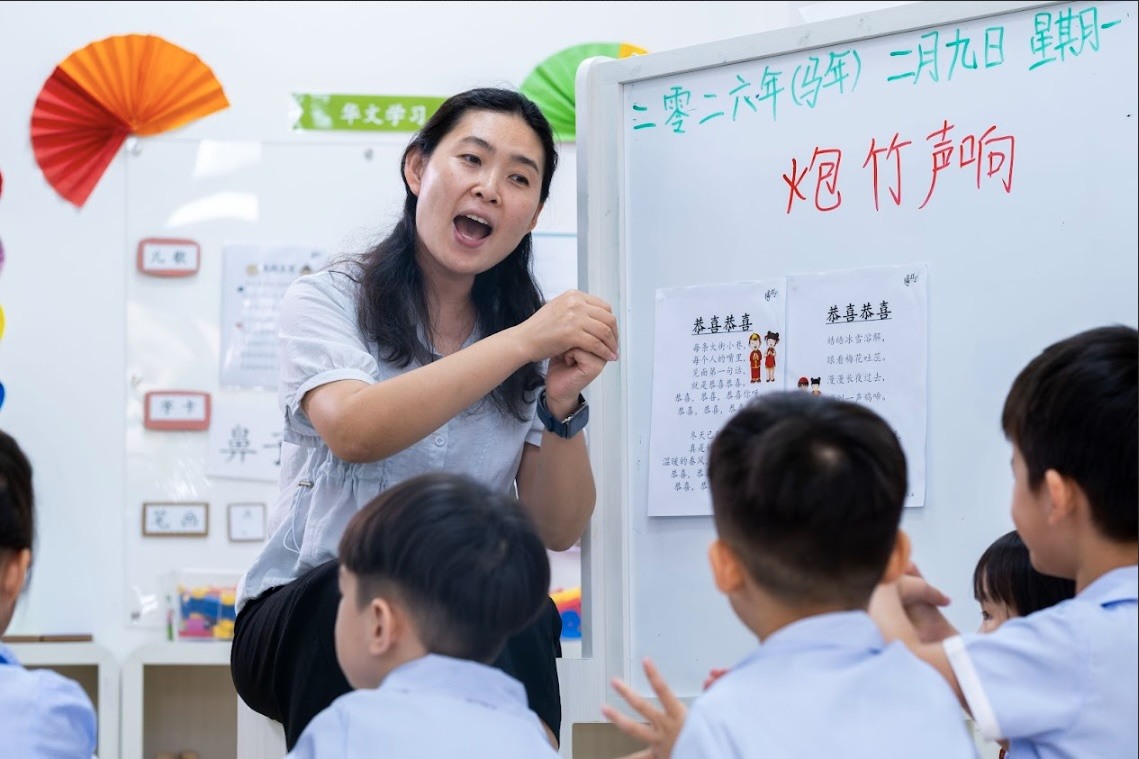
A language taught as a subject has a timetable slot. However, a language used as a medium is present during play, mealtimes, transitions, and the quieter moments between activities.
When you visit, listen to see whether educators speak to children naturally in both languages throughout the day, not only during set language time. Notice whether children initiate in Mandarin, not only when prompted. Observe whether the second language feels built into the day or added on to it. These details say more about a school's bilingual approach than anything written in a brochure.
How KiddiWinkie Schoolhouse Supports Bilingual Brain Development
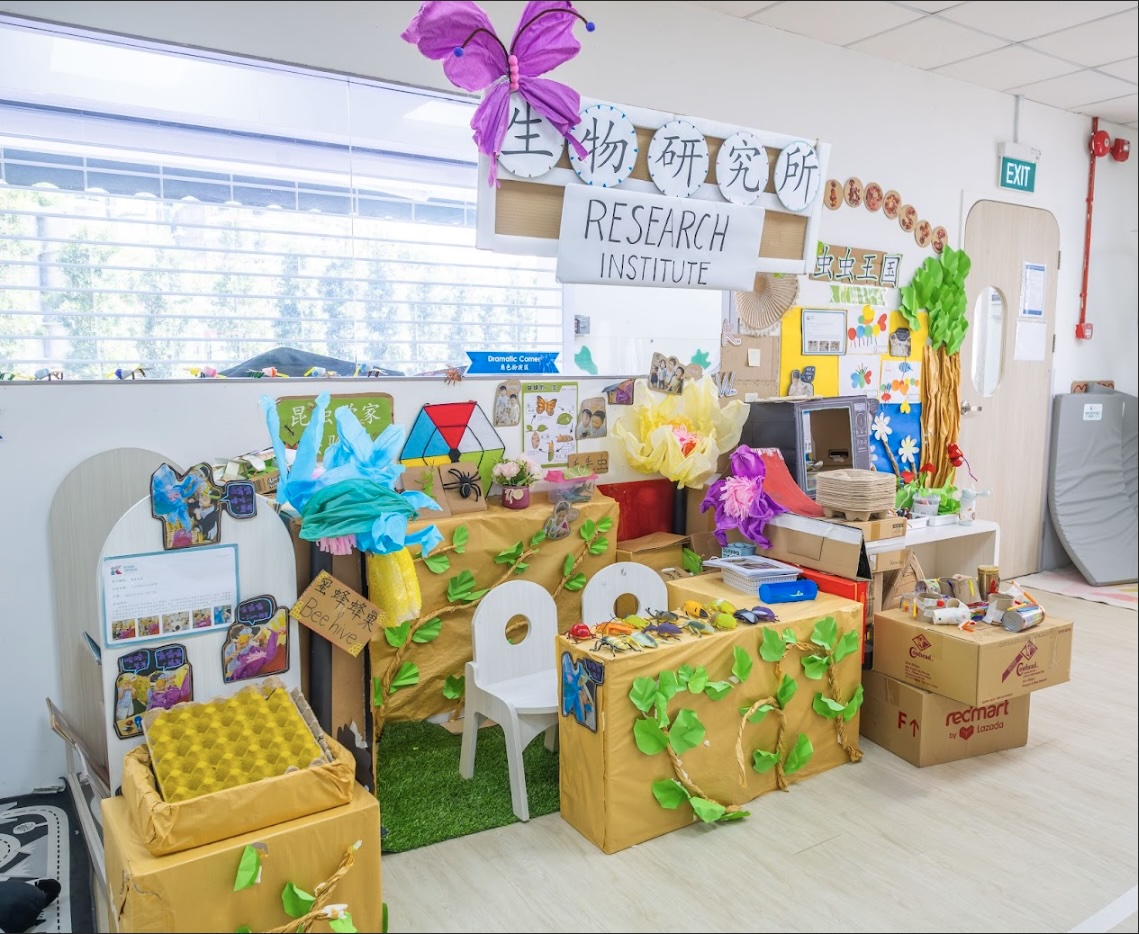
For parents asking which private childcare centres offer a bilingual curriculum in Singapore, or where to find a premium preschool education that gives both languages genuine weight, the answer at KiddiWinkie Schoolhouse begins with how we think about language itself.
Mandarin is not a separate lesson in our playgroup curriculum. It runs through storytelling, play, and the natural transitions of the day, giving children the consistent, low-pressure exposure that bilingual development depends on. Our Chinese Cultural Programme™ deepens this further by weaving Mandarin into every part of daily life, from Playgroup through Kindergarten 2. Through Author's Universe™, children use both languages to imagine, ask questions, and tell stories, giving Mandarin a genuine communicative purpose.
The best way to understand what a thoughtfully designed preschool curriculum looks like in practice is to see a morning unfold. We invite you to book a tour at one of our preschools in Singapore and spend time in the environment.


